
Nuclear Weapons
Nuclear weapons reporting track at the 2025 IPI World Congress
Journalists gathered in Vienna, Austria, on the sidelines of the 2025 IPI World Congress and Media Innovation Festival for a series of training and community-building activities to strengthen reporting on nuclear weapons issues.
Top photo: Journalists tour a new transportable electron beam system on the campus of the International Atomic Energy Agency’s (IAEA) nuclear applications lab in Seibersdorf, Austria.
Following the eventful Hiroshima Journalism Workshop in August, the Developing Story Project (DSP) by the Journalism and Media Program at the Stanley Center for Peace and Security partnered with Atomic Reporters and the International Press Institute (IPI) to co-organize a series of events alongside the 75th annual IPI World Congress, where more than 600 journalists and media professionals from around the world convened in a city that plays a crucial role in the nuclear regulatory regime.
The DSP cohort consisted of journalists interested in reporting on nuclear weapons issues from Georgia, Ukraine, Romania, Italy, France, Germany, India, Japan, Hungary, Kazakhstan, and the United States. They participated in three days of programming events in Vienna on October 23-25, 2025.
The cohort visited the rural campus of the International Atomic Energy Agency’s (IAEA) nuclear applications labs in Seibersdorf, 45 minutes outside of Vienna. Participants learned about how international inspectors collect samples from member states for analysis in the “clean room” facility at the Environmental Sample Laboratory, where tests can reveal evidence of undeclared nuclear activity. They also toured the Agency’s new transportable electron beam system, designed to be loaned out to member states seeking to train their scientists to use the technology in food safety, water treatment, and a range of other uses including preserving cultural artifacts. The tour concluded with a visit to the campus’s newly-opened visitor center. The visit was preceded by morning briefings from a veteran journalist and a nuclear safeguards expert from the IAEA.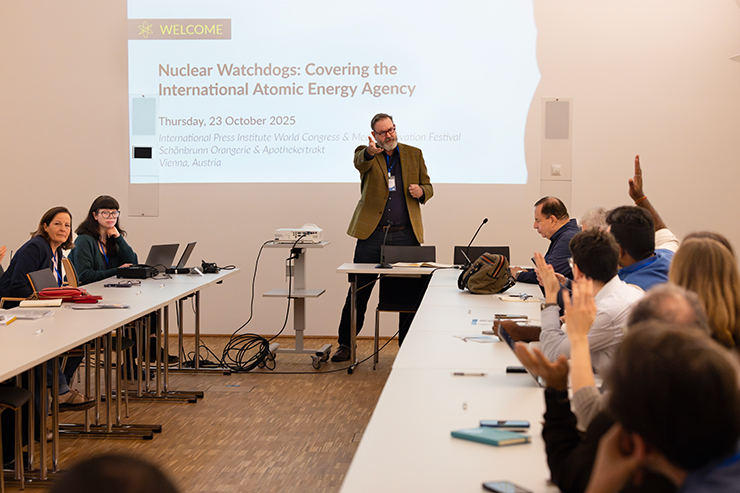 Jonathan Tirone of Bloomberg News briefed participants before their visit to the IAEA Safeguards Labs.
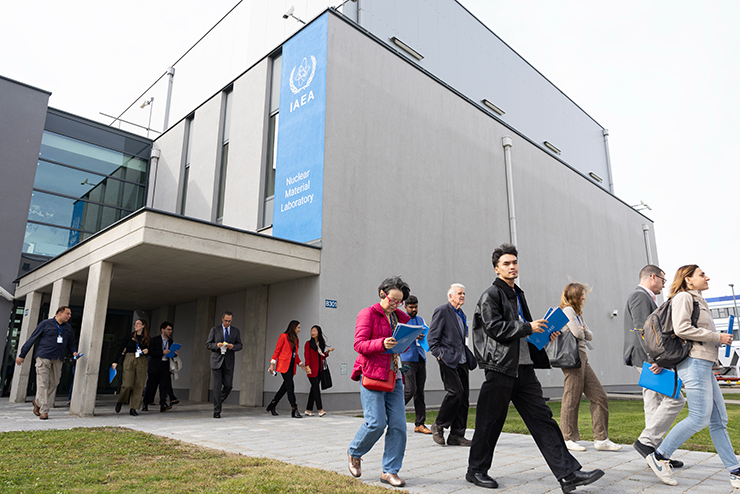 Participants tour the IAEA’s campus.
Three members of the cohort appeared on a panel at the IPI World Congress, “Atomic Secrets: Nuclear Weapons Reporting Beyond the Headlines”: W.J. Hennigan of The New York Times, Ukrainian reporter Anna Romandash, and Jonathan Tirone, a Vienna-based reporter for Bloomberg News. The panel was moderated by cohort member Laicie Heeley, CEO of Inkstick Media and host of the podcast, Things That Go Boom. The panel discussed the challenges of reporting on nuclear weapons and strategies for overcoming them.
In partnership with the Open Nuclear Network (ONN), the Developing Story Project presented a workshop titled “Cracking Nuclear Secrets: Open Source Nuclear Analysis and How to Use It in Reporting.” Three analysts from ONN led participants through several case studies and exercises to demonstrate the uses and misuses of open source analysis in nuclear weapons reporting.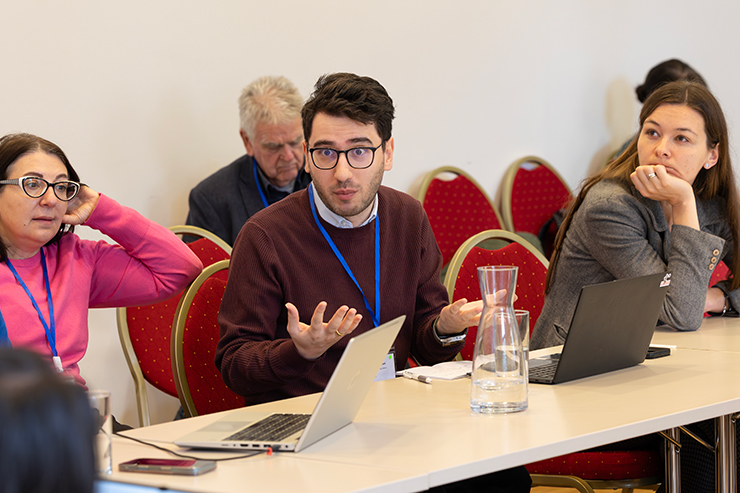 Participants worked on case studies of media coverage that used (or misused) open source intelligence in a workshop presented by Open Nuclear Network.
Three days of DSP programming events concluded with a screening of the documentary, Bombshell, at a century-old movie theater across town. The screening was followed by a discussion with filmmaker Ben Loeterman and a reception in the lobby of the cinema.
Akash Sharma, a DSP participant, commented that the film “resonates deeply” for journalists because “it highlights the timeless responsibility of the press to question, to investigate, and to bring to light truths that institutions may prefer to bury. In an era where information warfare and state narratives often dominate, this documentary feels more relevant than ever.”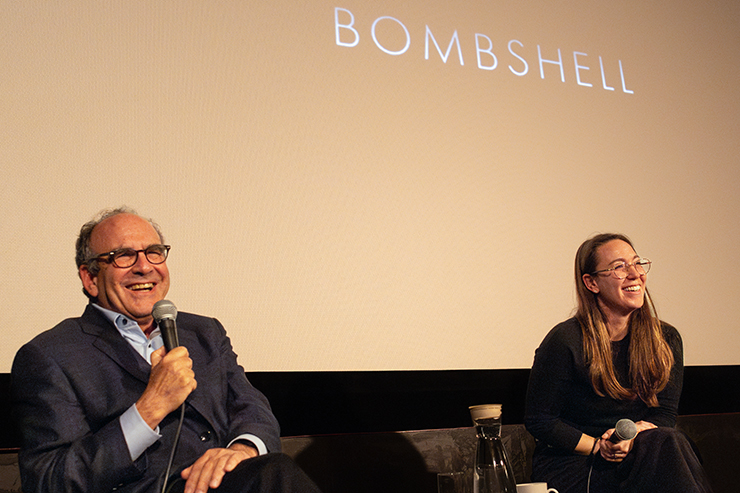 ‘Bombshell’ director Ben Loeterman, left, and Chloe Angyal of the Stanley Center during a post-screening discussion.
Indeed, the theme of this year’s IPI World Congress was “Defending the Future of Press Freedom,” which presented an opportunity for the Developing Story Project to highlight the connection between censorship, press access, government transparency, and nuclear weapons. Reporting on nuclear weapons is already difficult, and threats to press freedom make it more so, as well as making it even harder for a populace to understand how national budgets are spent and how national security apparatuses do or do not keep them safe.
Journalist Serena Console wrote that participating in the Developing Story Project’s programming events in Vienna created “a meaningful space for learning, collaboration, and reflection on how journalism can illuminate one of the world’s most complex and important topics.”
It has been an eventful first year for the Developing Story Project. The project kicked off in the spring of 2025 with virtual learning sessions for participants in Asia and Europe about strategies for covering nuclear weapons issues. The Hiroshima Journalism Workshop in August was DSP’s first in-person training and community-building opportunity for journalists, who had a chance to connect with a remarkable newsroom that has been continually covering the existential threat of nuclear weapons for 80 years. The programming events in Vienna at the IPI World Congress close out DSP’s inaugural year.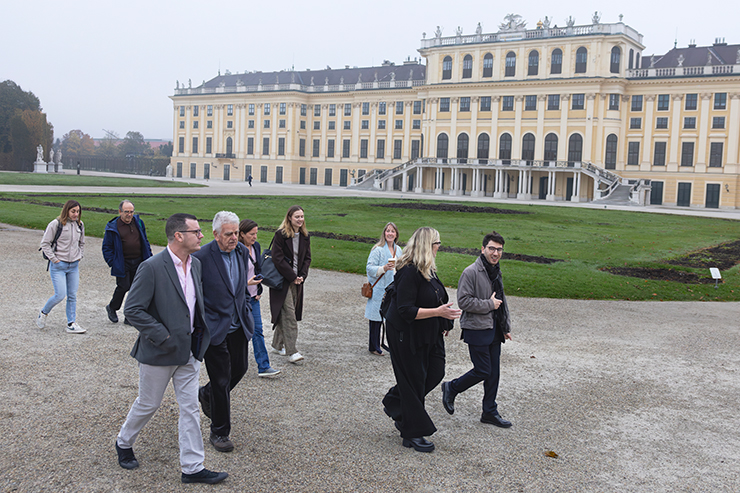 Journalists walk the daily commute from the hotel to the conference venue, which took the cohort through the gardens of the Schönbrunn palace.
The Developing Story Project will continue to collaborate with partners to offer programming that supports, strengthens, and sustains reporting on nuclear weapons and related issues next year and beyond. Sign up to receive nuclear weapons journalism and media updates by email to stay up to date on opportunities from the Developing Story Project.
Related Stories
View All